
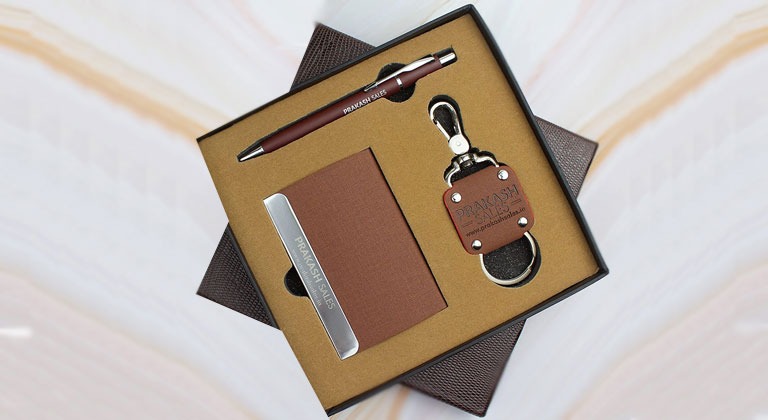
What looks like a simple branded mug or welcome kit usually goes through a surprisingly detailed process before it reaches an employee or client. Behind every successful gifting campaign is a structured system that balances creativity, logistics, and timing. Most companies rely on partners offering Customized Corporate Gifts to streamline this entire journey.
Let’s break down how it actually works in the Indian corporate setup.
Step 1: Understanding the Gifting Objective
Every project starts with clarity on why the gift is being sent.
Companies typically align gifting with:
- Employee onboarding
- Festive campaigns like Diwali
- Client retention programs
- Internal milestones or rewards
This stage defines the tone, budget, and type of customized corporate gifts required. A client gift, for example, will lean toward premium branding, while onboarding kits focus more on usability.
Step 2: Budget Planning and SKU Selection
Once the objective is clear, the next move is selecting products that fit both the budget and purpose.
Indian companies usually work within clear per-head budgets, which influence:
- Product category (tech, stationery, lifestyle)
- Material quality
- Level of customization
At this stage, vendors often suggest combinations instead of single items—bundling improves perceived value without significantly increasing cost.
Step 3: Design and Personalization
This is where customized corporate gifts start taking shape.
Design teams work on:
- Logo placement
- Color alignment with brand guidelines
- Personalization (names, departments, or locations)
A noticeable shift in recent years is moving beyond basic logo printing. Companies now prefer subtle branding that feels premium rather than overly promotional.
Step 4: Sampling and Approval
Before bulk production begins, samples are created.
This step helps teams:
- Check print quality
- Validate product durability
- Ensure brand consistency
Skipping this stage often leads to mismatched expectations, especially in large-scale campaigns.
Step 5: Bulk Production and Quality Checks
Once approved, production begins at scale.
Reliable vendors implement quality control at multiple stages:
- Raw material inspection
- Mid-production checks
- Final packaging verification
Consistency becomes critical here. Even small variations across batches can affect how the brand is perceived.
Step 6: Packaging and Experience Design
Packaging is no longer just protective—it’s part of the experience.
Companies now invest in:
- Branded boxes
- Custom inserts
- Welcome notes or message cards
A well-thought-out unboxing experience can significantly improve how the gift is received, especially for new employees.
Step 7: Logistics and Pan-India Delivery
Delivery is often the most complex part of the process.
Indian companies frequently need to ship gifts to:
- Multiple cities
- Remote employee locations
- Hybrid or work-from-home teams
This requires coordination across warehousing, courier partners, and tracking systems.
As discussed earlier in the planning stage, any gap here can disrupt the entire campaign, making logistics planning just as important as product selection.
Step 8: Feedback and ROI Tracking
After delivery, companies are increasingly tracking outcomes.
This includes:
- Employee feedback
- Client responses
- Engagement indicators
Customized corporate gifts are no longer treated as one-time expenses. They are evaluated based on impact—whether it’s improving onboarding experience or strengthening client relationships.
What Makes the Process Work Smoothly
From what we’ve discussed, three factors consistently determine success:
Clarity at the start
A defined goal prevents unnecessary revisions later.
Strong vendor coordination
An experienced gifting partner reduces friction across design, production, and delivery.
Focus on experience, not just products
Gifts that feel thoughtful perform far better than generic items with logos.
Final Thoughts
The journey from design to doorstep is far more structured than it appears. Each stage plays a role in shaping how the gift is perceived by the recipient.
Companies that treat customized corporate gifts as a planned initiative—rather than a last-minute task—consistently see better outcomes, whether in employee engagement or client retention.