
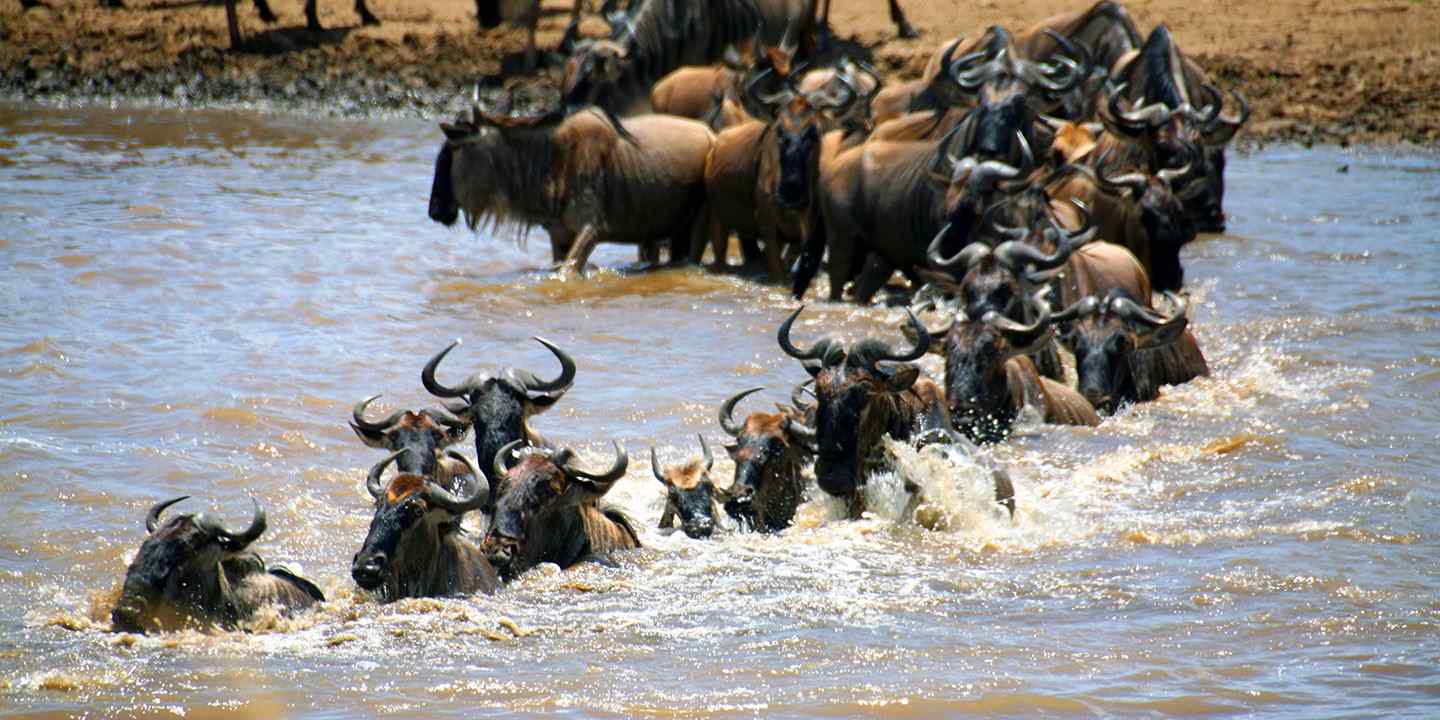
The wildebeest migration in Masai Mara is one of the world’s most spectacular wildlife events, often described as “the greatest wildlife show on Earth.” Every year, over a million wildebeest, accompanied by hundreds of thousands of zebras and gazelles, embark on a perilous journey across the Mara-Serengeti ecosystem in search of fresh grazing and water. A professional safari centered on this migration offers travelers an extraordinary opportunity to witness, photograph, and immerse themselves in one of nature’s most dramatic and enduring spectacles.
The Magnitude of the Migration
The wildebeest migration, also known as the Great Migration, is a continuous, cyclical movement that covers approximately 1,800 miles annually between Tanzania’s Serengeti National Park and Kenya’s Maasai Mara. The Maasai Mara represents the northernmost point of this migration, typically between July and October, when large herds arrive after crossing the Serengeti plains.
This migration is not only a journey of survival but also a showcase of the raw power and resilience of wildlife. Predators such as lions, cheetahs, leopards, and hyenas closely follow the herds, creating thrilling predator-prey interactions that are a highlight for wildlife enthusiasts and photographers. Crocodile-infested rivers, especially the Mara River, provide some of the most iconic and dramatic moments of the migration, as wildebeest and zebras risk everything to continue their journey.
The Maasai Mara: A Perfect Stage
The Maasai Mara National Reserve is the ideal setting for observing the migration. Covering 1,510 square kilometers of open savannah, rolling hills, and acacia woodlands, the Mara provides unparalleled visibility of vast herds moving across the landscape. Its nutrient-rich grasslands and permanent rivers attract massive concentrations of animals, making it a hub for wildlife activity during the migration season.
The Mara’s diverse habitats also support abundant predators and scavengers, providing opportunities to witness hunting strategies, confrontations, and survival dynamics in action. For photographers, this combination of open plains, dramatic skies, and high-density wildlife creates endless opportunities for both wide-angle landscape shots and intimate wildlife portraits.
Planning a Professional Migration Safari
A professional wildebeest migration safari requires careful planning to maximize wildlife encounters and photographic opportunities. The timing, location, and type of accommodation all play a crucial role in shaping the experience.
- Timing: The migration’s schedule varies slightly each year, depending on rainfall patterns in the Serengeti. Typically, the herds reach the Maasai Mara between July and October, with river crossings occurring most spectacularly from August to September. This period is ideal for witnessing dramatic crossings and predator-prey interactions.
- Guided Experience: Expert guides are essential for locating the herds, predicting their movements, and interpreting animal behavior. Guides provide insight into the interactions between predators and prey, identify individual animals, and advise on photography techniques, ensuring a rich and educational safari experience.
- Vehicles and Equipment: Customized safari vehicles with pop-up roofs, swivel seats, and ample space for cameras and spotting scopes allow unobstructed viewing. Early morning and late afternoon drives capitalize on the “golden hours” when lighting is perfect for photography and wildlife is most active.
Dramatic River Crossings
One of the migration’s most iconic moments is the Mara River crossing. As thousands of wildebeest and zebras plunge into crocodile-infested waters, chaos, tension, and survival instincts are on full display. These crossings are not only thrilling to witness but also offer photographers and wildlife enthusiasts the chance to capture action-packed, emotionally compelling images.
Safety is paramount during river crossings. Guides position vehicles at strategic points along riverbanks, providing the best views while maintaining a safe distance from both wildlife and hazards. Observing these crossings in a controlled, professional setting ensures a memorable experience without compromising safety.
Predator-Prey Interactions
The migration’s vast herds attract large populations of predators, creating dynamic wildlife encounters. Lions often ambush wildebeest on open plains, cheetahs chase vulnerable calves, and hyenas track injured or young animals. Professional safari guides help travelers locate these interactions and understand the ecological balance at play. These predator-prey dynamics not only provide unforgettable experiences but also highlight the natural rhythms of life and survival in the Mara.
Luxury and Comfort
Professional migration safaris combine adventure with comfort. Lodges and luxury tented camps are often situated within or near the Maasai Mara, minimizing travel time and maximizing viewing opportunities. Accommodations provide modern amenities, including en-suite bathrooms, gourmet dining, and panoramic viewing decks.
Tented camps offer an immersive wilderness experience, allowing travelers to wake to the sounds of the savannah and step directly into prime photographic locations. Many lodges also provide photographic hides, private verandas, and expert staff to enhance wildlife observation and capture memorable images.
Conservation and Responsible Tourism
Ethical and sustainable tourism is central to professional migration safaris. Guides emphasize minimal disturbance to wildlife, safe viewing distances, and adherence to park regulations. Many safari operators collaborate with local communities, wildlife conservancies, and conservation initiatives to ensure that tourism supports habitat preservation and anti-poaching efforts.
Travelers are encouraged to respect nature, avoid interfering with animals, and leave no trace. By combining luxury, adventure, and conservation awareness, migration safaris promote responsible tourism while providing unforgettable experiences.
Planning and Customization
Professional wildebeest migration safaris can range from 5 to 14 days, depending on traveler interests and locations. Packages typically include private vehicles, expert guides, park fees, luxury accommodation, and meals. For photographers, tours may also provide equipment support, photography advice, and guidance on capturing key moments of the migration.
Customized itineraries ensure that travelers experience river crossings, predator-prey interactions, and expansive wildlife sightings while also enjoying leisure time in luxurious settings. Early morning drives, bush breakfasts, and sundowners in the savannah all contribute to a holistic and immersive safari experience.
Conclusion
The wildebeest migration in Masai Mara is more than a wildlife event—it is a living spectacle that demonstrates the resilience, drama, and beauty of the African wilderness. From the thunderous river crossings and predator-prey chases to the expansive plains filled with grazing herds, every moment is extraordinary.
With expert guides, luxury accommodations, ethical practices, and carefully curated itineraries, a professional Maasai Mara migration safari offers travelers an unparalleled opportunity to witness, photograph, and fully immerse themselves in one of nature’s most iconic phenomena. For wildlife enthusiasts, photographers, and safari travelers, the Great Migration is a once-in-a-lifetime adventure—an awe-inspiring journey into the heart of Africa’s wild heritage.