
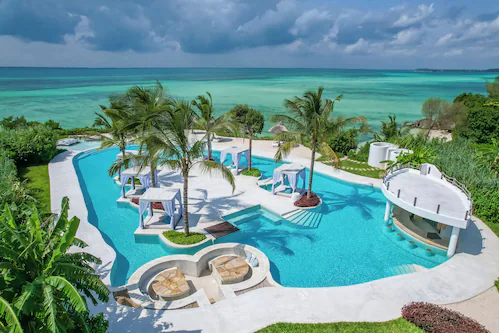
From snow-capped Kilimanjaro to turquoise Zanzibar shores — Tanzania is not just a destination. It is a complete world waiting to be discovered.
Introduction
Some vacations offer relaxation. Some offer adventure. A handful offer culture, history, and cuisine. A Tanzania vacation offers all of this — and then something more. It offers the sensation of standing at the edge of something ancient and enormous, the quiet certainty that the world is far bigger, wilder, and more beautiful than everyday life allows you to remember.
Tanzania sits on the eastern coast of Africa, bordered by Kenya, Uganda, Rwanda, Burundi, the Democratic Republic of Congo, Zambia, Malawi, and Mozambique. It is a country of staggering geographic diversity — from the roof of Africa at the summit of Mount Kilimanjaro (5,895 metres) to the coral-fringed beaches of Zanzibar, from the vast open savannas of the Serengeti to the chimpanzee forests of Mahale Mountains. This is a nation where a single two-week trip can take you through half a dozen completely different ecosystems, each more compelling than the last.
Tanzania is also a country of remarkable cultural richness. Home to over 120 ethnic groups and the warmth of Swahili hospitality — defined by the guiding philosophy of Ubuntu, the belief in shared humanity — Tanzania welcomes its visitors not merely as tourists but as honoured guests. The country’s political stability, well-developed tourism infrastructure, and genuine pride in its natural and cultural heritage make it one of the safest and most rewarding vacation destinations anywhere in the world.
This comprehensive guide covers every dimension of planning an unforgettable Tanzania vacation — from the iconic wildlife experiences and beach retreats to cultural immersion, adventure travel, and practical tips that make the difference between a good trip and an extraordinary one.
Why Tanzania Stands Apart as a Vacation Destination
In a world saturated with travel options, Tanzania occupies a genuinely unique position. It is one of the very few destinations on Earth where you can experience world-class wildlife safaris, high-altitude mountain trekking, pristine Indian Ocean beaches, and authentic cultural encounters all within the boundaries of a single country — and often within a single two-week vacation.
Tanzania consistently ranks among the top travel destinations globally, and for reasons that go far beyond marketing. The country protects over 38 percent of its total land area as national parks, game reserves, conservation areas, and marine parks — a conservation commitment unmatched by almost any other nation. Its coastline stretches for over 1,400 kilometres along the Indian Ocean, framing some of the most beautiful beaches in the world. Its people are among the most genuinely welcoming on the continent.
For travellers seeking meaning as well as beauty, Tanzania also offers a profound encounter with human origins — the Olduvai Gorge in the Ngorongoro Conservation Area is one of the most important paleoanthropological sites ever discovered, containing fossil evidence of some of humanity’s earliest ancestors. When you stand on Tanzanian soil, you are standing on the birthplace of our species.
The Essential Tanzania Vacation Experiences
1. Wildlife Safari in the Serengeti
No Tanzania vacation is complete without time in the Serengeti National Park — arguably the most iconic wildlife destination on Earth. Spanning nearly 15,000 square kilometres of open savanna, acacia woodland, and riverine forest, the Serengeti delivers wildlife encounters of a scale and intensity found nowhere else. Lions rule vast territories here. Cheetahs launch explosive sprints across open plains. Leopards drape themselves lazily over fever tree branches at dusk.
The Serengeti is also home to the Great Migration — the year-round movement of over 1.5 million wildebeest, 400,000 zebra, and hundreds of thousands of gazelle across the ecosystem. The dramatic Mara River crossings between July and October, where massive herds plunge into crocodile-filled waters, represent one of the most extraordinary wildlife spectacles on the planet.
2. Ngorongoro Crater — A World Within a World
The Ngorongoro Crater is Tanzania’s most concentrated wildlife experience and a UNESCO World Heritage Site of extraordinary significance. Formed by the collapse of an ancient volcano, this 260-square-kilometre caldera is home to nearly 25,000 large mammals, including one of Africa’s last stable populations of black rhinoceros. The crater walls act as a natural enclosure, creating an almost impossibly rich ecosystem where Big Five sightings in a single day are not the exception — they are the expectation.
Beyond the wildlife, the Ngorongoro Conservation Area supports the Maasai people, who continue to graze their cattle across these ancient lands in one of the world’s most enduring examples of humans and wildlife coexisting. Visiting a traditional Maasai boma (village) offers a genuinely moving cultural counterpoint to the game drives.
3. Climbing Mount Kilimanjaro
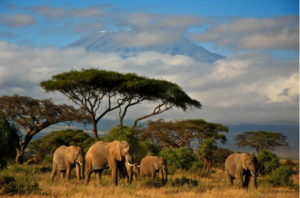
Standing at 5,895 metres above sea level, Mount Kilimanjaro is Africa’s highest peak and one of the world’s most accessible high-altitude treks — requiring no technical climbing equipment or prior mountaineering experience, only physical fitness, mental determination, and proper acclimatisation. Kilimanjaro rises dramatically from the surrounding plains, its glaciated summit visible for hundreds of kilometres on clear mornings.
Six established routes offer approaches of varying difficulty and duration, from the gentle Marangu Route (sometimes called the “Coca-Cola Route” for its relative accessibility) to the stunning and remote Lemosho Route, widely regarded as the finest ascent experience. Reaching Uhuru Peak at sunrise — with all of Africa laid out below you in a carpet of cloud — is a moment of pure, unforgettable triumph.
4. Zanzibar — The Spice Island Paradise
A Tanzania vacation without Zanzibar is like a symphony without its final movement. The archipelago of Zanzibar — comprising the main island of Unguja and the smaller Pemba — sits 35 kilometres off the Tanzanian coast in the warm Indian Ocean, and it is one of the most beautiful island destinations in the world.
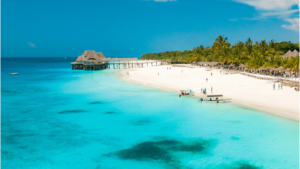
Stone Town, Zanzibar’s ancient capital, is a UNESCO World Heritage Site of labyrinthine alleyways, ornate carved wooden doors, crumbling merchant mansions, and vibrant spice markets that have traded for centuries. The island’s beaches — particularly Nungwi and Kendwa in the north and Paje in the east — are fringed with powdery white sand and turquoise water of an almost unreal clarity. The surrounding coral reefs offer world-class snorkelling and scuba diving, with extraordinary marine diversity including whale sharks, sea turtles, and technicolour reef fish.
5. Chimpanzee Trekking in Mahale Mountains
For those willing to venture off the well-worn northern circuit, the Mahale Mountains National Park on the remote shores of Lake Tanganyika offers one of Africa’s most intimate and extraordinary wildlife encounters. Mahale is home to habituated communities of wild chimpanzees — our closest living relatives — who have been studied by researchers for decades and are accustomed to careful human presence.
Tracking chimpanzees through the dense mountain forest, listening to their calls echo between the trees, and ultimately sitting within metres of a troop engaged in their daily social rituals is a profoundly moving experience. Combined with the spectacular backdrop of Lake Tanganyika — one of the world’s deepest and most ancient lakes — Mahale represents Tanzania at its most remote and most magical.
6. Cultural Immersion — Tanzania’s Human Tapestry
Tanzania’s cultural richness is as compelling as its natural wonders. The Maasai of the northern highlands, with their distinctive red shukas and centuries-old pastoral traditions, offer visitors an authentic window into a way of life that has changed remarkably little despite the modern world pressing at its edges. The Hadzabe of the Lake Eyasi region are among the last remaining hunter-gatherer communities in East Africa, practising skills and customs that stretch back thousands of years. The Chagga people of Kilimanjaro’s lower slopes maintain living traditions of agriculture, storytelling, and craft that form an essential part of Tanzania’s cultural identity.
A well-designed Tanzania vacation weaves these cultural encounters naturally into the itinerary — not as performative tourist attractions, but as genuine exchanges between travellers and communities that take pride in sharing their heritage.
Planning Your Tanzania Vacation: Month-by-Month Guide
Tanzania rewards thoughtful timing. Here is a season-by-season overview to help you match your visit to your priorities.
- January – March: Warm and green with short afternoon showers. Excellent for wildlife in the southern Serengeti (calving season), birdwatching, and beach holidays in Zanzibar. Lower tourist volumes and attractive rates across most lodges.
- April – May: Long rains bring lush landscapes, near-empty parks, and the lowest rates of the year. Remote roads can be challenging, but rewards include dramatic skies and exclusive wildlife encounters.
- June – October: Peak season. Dry conditions concentrate wildlife around water sources, vegetation thins for easier viewing, and the Mara River crossings peak in July and August. Kilimanjaro treks are ideal during this window.
- November – December: Short rains bring brief afternoon showers but excellent conditions overall. The landscape is vividly green, birding is outstanding, and prices are moderate. A superb value travel window.
Tanzania Vacation Budgeting: What to Expect
Tanzania accommodates a wide spectrum of travel budgets, though it is worth noting that access fees to national parks are government-regulated and non-negotiable regardless of your accommodation category.
- Budget Travel: $100–$200 per person per day, covering camping safaris, guesthouses, and shared transport. Best suited to travellers with flexibility and time.
- Mid-Range: $250–$600 per person per day, covering comfortable lodge accommodation, private guided game drives, and a mix of park experiences.
- Luxury and Ultra-Luxury: $700–$3,000+ per person per day, covering exclusive-use tented camps, private vehicles, fly-in transfers, and bespoke itinerary design.
A two-week Tanzania vacation combining a 10-day safari and 4 nights in Zanzibar at a mid-range level typically costs between $5,000 and $9,000 per person excluding international flights.
Essential Practical Information
- Visa: Most nationalities require a visa, easily obtained via Tanzania’s official e-visa portal. Apply at least three weeks before travel.
- Currency: The Tanzanian Shilling (TZS) is the local currency. US dollars are widely accepted in parks, lodges, and tourist areas. Carry small denominations.
- Health: Malaria prophylaxis is essential. Yellow fever vaccination is required from endemic countries. Consult a travel health clinic 6 to 8 weeks before departure.
- Getting There: Julius Nyerere International Airport (Dar es Salaam) and Kilimanjaro International Airport (Arusha) are the main international gateways, with connections through Nairobi, Addis Ababa, Doha, Dubai, Amsterdam, and London.
- Getting Around: Domestic light aircraft transfers connect the major parks efficiently. Road transfers are available but can be lengthy between remote destinations.
Conclusion
A Tanzania vacation is not something you simply take — it is something you are taken by. From the moment the vast Serengeti plain opens before you on your first morning game drive, to the final sunset over Zanzibar’s Indian Ocean horizon, Tanzania holds you in a state of continuous wonder that few destinations anywhere in the world can match.
What makes Tanzania truly exceptional — beyond the wildlife, the mountains, the beaches, and the culture — is the sense that you are encountering something genuine. The wildebeest do not migrate for your entertainment. The chimpanzees do not live in the forest for the benefit of your camera. Kilimanjaro does not rise 5,895 metres to provide a backdrop for your photographs. Tanzania’s wonders exist entirely on their own terms, and the privilege of witnessing them in person carries with it a quiet but lasting responsibility.
Travel thoughtfully. Choose operators who invest in local communities and conservation. Leave Tanzania better, not just visited. And carry the memory of those vast skies and those wild creatures with you as a reminder of what the world is capable of being, when we choose to protect it.
Tanzania does not just give you a vacation. It gives you a new understanding of what it means to be alive on this extraordinary planet.
Key Takeaways
- Tanzania is a complete vacation destination — offering world-class wildlife safaris, mountain trekking, Indian Ocean beaches, and rich cultural encounters all within a single country.
- Over 38% of Tanzania’s land is protected, ensuring wildlife encounters of a depth, authenticity, and scale unmatched almost anywhere else on Earth.
- Zanzibar is the perfect extension to any Tanzania safari — combining UNESCO Stone Town, pristine beaches, coral reefs, and spice culture just 35 kilometres off the coast.
- Mount Kilimanjaro is accessible to non-climbers — requiring no technical experience, only fitness, determination, and proper acclimatisation across a 6 to 9 day guided trek.
- The best time to visit depends on your priorities — dry season (June–October) for peak game viewing; calving season (January–March) for dramatic predator activity and lush landscapes.
- Tanzania suits all budgets, from camping safaris at $150 per day to ultra-luxury tented camps at $2,500+, with mid-range options offering outstanding value at $350–$600 per day.
- Cultural encounters are as rewarding as natural ones — time spent with the Maasai, Hadzabe, or Chagga communities adds a profound human dimension to any Tanzania vacation.
- Responsible tourism matters — choosing TATO-registered operators, supporting community-based tourism initiatives, and travelling with conservation awareness ensures your visit contributes positively to Tanzania’s future.
Frequently Asked Questions (FAQ)
Q: Is Tanzania a good vacation destination for first-time Africa travellers?
A: Tanzania is widely considered one of the best first-time Africa destinations in the world. Its well-developed northern tourism circuit, outstanding English-language guide infrastructure, diverse mix of experiences, and genuine political stability make it approachable and deeply rewarding for first-timers. A classic itinerary combining Tarangire, Ngorongoro, and the Serengeti followed by Zanzibar delivers a perfect introduction to everything East Africa offers.
Q: How long should a Tanzania vacation be?
A: A minimum of 10 to 14 days is ideal for a well-rounded Tanzania vacation — allowing 7 to 10 days for safari and cultural experiences, plus 3 to 4 days in Zanzibar. If you plan to climb Kilimanjaro, add an additional 7 to 9 days for the trek. Travellers with limited time can accomplish a meaningful 5 to 7 day northern safari circuit, though the experience is richer with more time.
Q: What is the best way to get to Tanzania?
A: Most international travellers fly into Kilimanjaro International Airport (JRO) near Arusha for the northern safari circuit, or Julius Nyerere International Airport (DAR) in Dar es Salaam for southern destinations and Zanzibar. Key hub connections include Nairobi (Kenya Airways, Ethiopian Airlines), Addis Ababa (Ethiopian Airlines), Doha (Qatar Airways), Dubai (Emirates), Amsterdam (KLM), and London (British Airways, Kenya Airways).
Q: Do I need travel insurance for a Tanzania vacation?
A: Comprehensive travel insurance is absolutely essential. Your policy must cover emergency medical evacuation by air, trip cancellation and interruption, and medical treatment abroad. Medical facilities in remote safari areas are extremely limited, and an air evacuation to Nairobi or Arusha can cost tens of thousands of dollars without appropriate coverage. Do not travel to Tanzania without it.
Q: What currency should I bring to Tanzania?
A: US dollars are the most widely accepted foreign currency in Tanzania’s tourism sector — used in national parks, lodges, camps, and most tourist-facing businesses. Bring clean, undamaged notes printed after 2006, as older or worn notes are frequently refused. Tanzanian Shillings are needed for local markets, transport, and smaller purchases. Avoid exchanging currency at airports; use reputable bureau de change offices in Arusha or Dar es Salaam.
Q: Is Tanzania safe for solo travellers?
A: Tanzania is generally safe for solo travellers, including solo women. The majority of visitors travel without any security incidents. As with any international destination, standard precautions apply — avoid displaying expensive items, use licensed taxis or hotel transfers at night, and stay aware of your surroundings in busy urban areas. Solo travellers on organised safari itineraries are exceptionally well looked after by their guides and camp teams.
Q: Can I combine a Tanzania vacation with Kenya?
A: Absolutely — a Tanzania-Kenya combination is one of the classic East Africa itineraries. The Serengeti and Kenya’s Maasai Mara form a single connected ecosystem, and many travellers combine both on a single trip. Visa requirements vary by nationality, so check whether you need a single-country visa or the East Africa Tourist Visa (valid for Tanzania, Kenya, and Uganda) before booking.
Q: What is the best way to experience Zanzibar?
A: Zanzibar rewards at least 3 to 5 days. Spend one to two days exploring Stone Town on foot — wandering its labyrinthine alleyways, visiting the historic slave market, and eating at the famous Forodhani Night Market. Devote the remaining days to the beaches: Nungwi and Kendwa in the north for swimming (no tidal limitations), or Paje in the east for kitesurfing and a more laid-back atmosphere. A spice tour, sunset dhow cruise, and snorkelling trip to the reef round out the essential Zanzibar experience.
Q: What is the single most important tip for planning a Tanzania vacation?
A: Book early and use a specialist. The finest camps, lodges, and guides in Tanzania fill up 9 to 12 months in advance, particularly for peak migration season and Kilimanjaro summit permits. Beyond logistics, a specialist operator with genuine on-the-ground knowledge and long-standing relationships with guides and communities will consistently deliver a richer, more authentic, and more seamlessly managed experience than any self-arranged itinerary can match.
Your Tanzania vacation begins the moment you decide to go. Everything extraordinary follows from there.